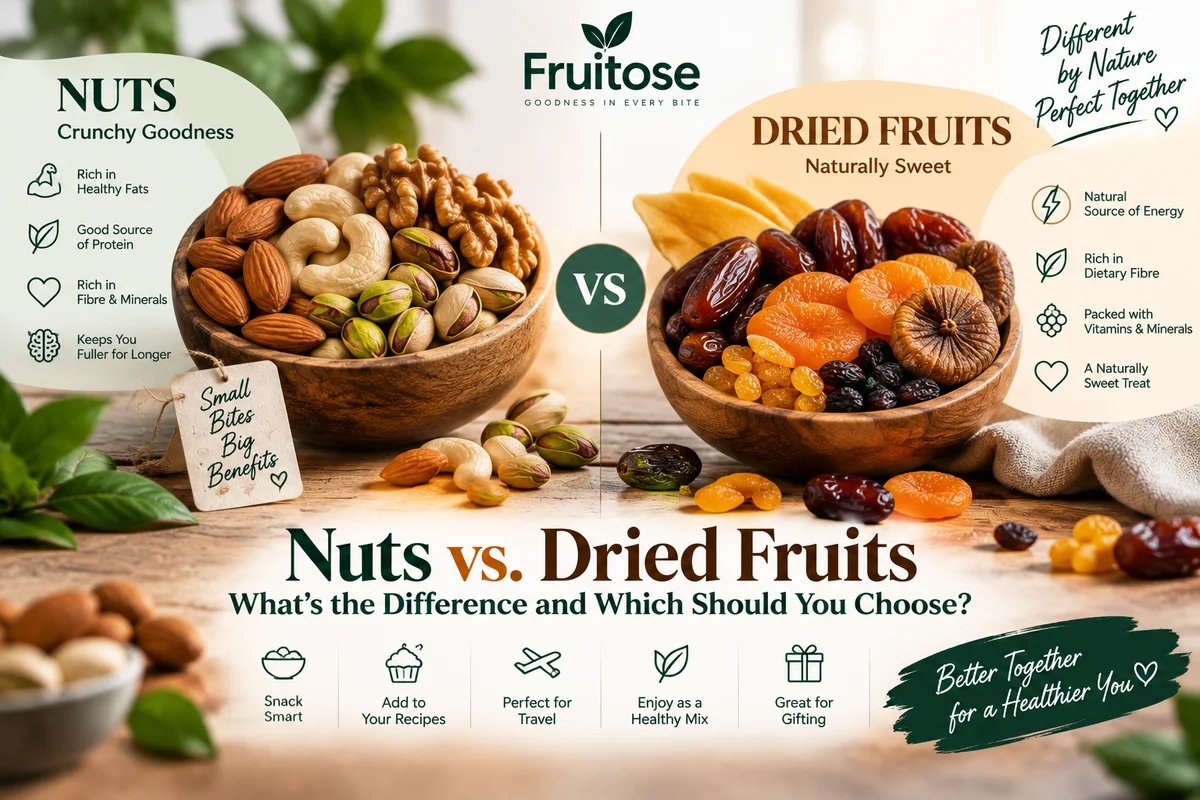
Dry Fruits and Their Benefits: A Simple Guide to Healthy Snacking
Dry fruits are among the most convenient and nutritious foods that can be included in our daily diet. Almonds, cashews, walnuts, pistachios, raisins, figs, dates and other dried fruits are naturally rich in nutrients and offer a delicious alternative to highly processed snacks.
Because their water content is reduced during drying, dry fruits are concentrated sources of energy, making them particularly useful as a convenient snack. They can be enjoyed on their own or added to breakfast bowls, cereals, smoothies, desserts and traditional recipes.
Why Include Dry Fruits in Your Diet?
1. Rich in Essential Nutrients
Many dry fruits provide a combination of protein, dietary fibre, healthy fats, vitamins, minerals and naturally occurring antioxidants. The nutritional profile varies considerably from one type to another, so eating a variety can provide a broader range of nutrients.
2. A Convenient Source of Energy
Dry fruits are nutrient-dense and naturally provide carbohydrates, fats and, in some varieties, protein. Dates and raisins, for example, contain naturally occurring sugars that can provide quick energy, while nuts such as almonds and walnuts provide healthy fats and protein for a more satisfying snack.
3. Supports Digestive Health
Many dry fruits contain dietary fibre, which plays an important role in maintaining normal digestive function. Raisins, figs, almonds and dates can contribute to daily fibre intake when consumed as part of a balanced diet.
4. Healthy Fats from Nuts
Almonds, walnuts, pistachios and cashews contain unsaturated fats. Replacing foods high in saturated fats with foods containing unsaturated fats can be part of a heart-conscious eating pattern.
Walnuts are also particularly notable because they provide alpha-linolenic acid (ALA), a plant-based omega-3 fatty acid.
5. Provides Important Minerals
Dry fruits and nuts can contribute minerals such as magnesium, potassium, copper, manganese and iron. The exact nutrients and quantities depend on the variety.
For example, almonds are a useful source of magnesium, while dates and raisins provide potassium and other minerals.
6. Natural Antioxidant Compounds
Nuts and dried fruits contain various naturally occurring antioxidant compounds. These compounds help protect cells from oxidative stress and form part of a diet rich in plant foods.
Different varieties contain different antioxidant compounds, which is another reason to enjoy a diverse selection.
7. A Versatile Food
One of the biggest advantages of dry fruits is their versatility. They can be:
Enjoyed as a quick snack
Added to breakfast cereals and oatmeal
Mixed into yoghurt
Blended into smoothies
Added to salads
Used in baking
Included in homemade trail mixes
Used in Indian sweets and traditional recipes
Popular Dry Fruits and What They Offer
Almonds: Known for their protein, fibre, healthy fats, vitamin E and magnesium.
Walnuts: A good source of healthy fats, including plant-based omega-3 ALA.
Pistachios: Provide protein, fibre, healthy fats and several important micronutrients.
Cashews: Provide healthy fats, protein, copper, magnesium and other minerals.
Raisins: Naturally sweet and provide dietary fibre, potassium and antioxidant compounds.
Figs: Provide dietary fibre and minerals and have a naturally sweet flavour.
Dates: Naturally sweet and provide carbohydrates, fibre, potassium and other nutrients.
How Much Should You Eat?
Dry fruits are nutrient-dense, so portion size matters. A small handful of nuts or a modest serving of dried fruit can be incorporated into a balanced diet.
Choose unsalted and minimally processed varieties when possible, particularly if you are looking for an everyday healthy snack. Dried fruits with added sugar should also be distinguished from naturally dried fruit.
Tips for Storing Dry Fruits
Proper storage helps maintain freshness, flavour and texture. Keep dry fruits in a cool, dry place, away from direct sunlight and moisture. After opening, storing them in an airtight container can help maintain quality. Some products, particularly nuts and certain dried fruits, may benefit from refrigeration for longer storage.
The Bottom Line
Dry fruits offer a convenient combination of taste, nutrition and versatility. From the healthy fats and protein found in nuts to the fibre and naturally occurring sugars found in dried fruits, different varieties can contribute valuable nutrients to a balanced diet.
The key is variety, appropriate portions and choosing quality products. Whether enjoyed as a morning snack, added to breakfast, used in cooking or included in a festive gift hamper, dry fruits can be a simple and delicious part of an everyday eating pattern.
Fruitose brings together a carefully selected range of dry fruits, nuts, dates, seeds and healthy snacks—making it easier to add natural goodness to your everyday routine.