Nuts vs. Dried Fruits: What’s the Difference and Which Should You Choose?
Walk into any dry-fruit store and you will find almonds, cashews, walnuts, pistachios, raisins, dates, figs and many other varieties together. Although they are often grouped under the term **“dry fruits,” nuts and dried fruits are actually different foods with different nutritional characteristics.
Understanding the difference can help you choose the right combination for your everyday snacking, breakfast, cooking and travel needs.
What Are Nuts?
Nuts are seeds or seed-like edible parts of plants that are generally rich in healthy fats, protein, fibre and minerals.
Popular examples include:
Almonds
Cashews
Walnuts
Pistachios
Hazelnuts
Pecans
Nuts are naturally crunchy and satisfying, making them popular as snacks and cooking ingredients.
What Are Dried Fruits?
Dried fruits are fruits from which much of the water has been removed through drying or dehydration. Removing water concentrates their natural sugars and flavours.
Common examples include:
Raisins
Dates
Dried Figs
Dried Mango
Dried Kiwi
Dried Apricots
Prunes
Dried fruits generally have a softer or chewy texture and a naturally sweet taste.
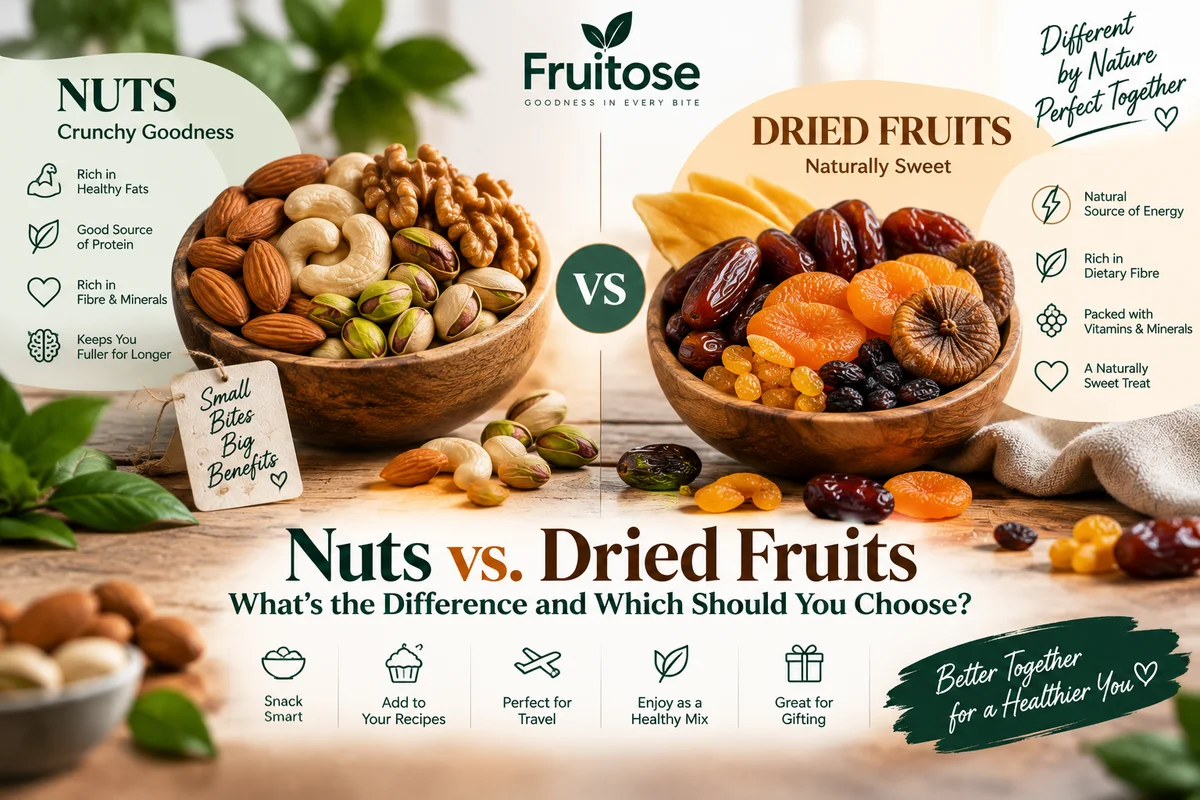
Nuts vs. Dried Fruits: The Key Difference
The simplest way to understand the difference is:
Nuts are generally richer in healthy fats and protein, while dried fruits are generally richer in naturally occurring carbohydrates and sugars.
Both can contribute useful nutrients to a balanced diet, but they serve different purposes and have different textures and flavours.
Nutritional Characteristics of Nuts
Nuts such as almonds, walnuts, cashews and pistachios can provide:
Protein
Dietary fibre
Unsaturated fats
Vitamin E
Magnesium
Copper
Manganese and other minerals
Because nuts are relatively energy-dense, a small serving can be satisfying.
Almonds
Almonds are known for their crunchy texture and provide protein, fibre, vitamin E, magnesium and unsaturated fats.
Walnuts
Walnuts are particularly known for their healthy fat content and provide the plant-based omega-3 fatty acid ALA.
Pistachios
Pistachios provide protein, fibre, unsaturated fats and a range of micronutrients.
Cashews
Cashews have a creamy texture and provide protein, unsaturated fats, copper, magnesium and other nutrients.
Nutritional Characteristics of Dried Fruits
Dried fruits can provide:
Dietary fibre
Naturally occurring carbohydrates
Naturally occurring sugars
Potassium and other minerals
Various plant compounds
Because water is removed during drying, dried fruits are more concentrated than their fresh counterparts by weight.
Raisins
Raisins are naturally sweet dried grapes and can provide dietary fibre and potassium.
Dates
Dates contain naturally occurring sugars and carbohydrates along with fibre and minerals such as potassium.
Figs
Dried figs provide dietary fibre and minerals while offering a naturally sweet flavour and chewy texture.
Dried Mango and Kiwi
These provide a convenient way to enjoy fruit in a dried format. Always check the ingredient list because some commercially prepared dried fruits may contain added sugar.
Which Is Better for Snacking?
There is no universal winner between nuts and dried fruits. The better choice depends on what you want from your snack.
If you want protein, healthy fats and a crunchy texture, nuts can be a good choice.
If you want natural sweetness and carbohydrates, dried fruits can be a convenient option.
For a more varied snack, you can combine both.
Why Combine Nuts and Dried Fruits?
A combination of nuts and dried fruits brings together different flavours, textures and nutritional characteristics.
For example:
Almonds + Raisins provide crunch and natural sweetness.
Walnuts + Dates create a rich combination of healthy fats and naturally sweet fruit.
Pistachios + Dried Mango combine a crunchy nut with a chewy, fruity texture.
Cashews + Figs make an interesting combination for snacking or breakfast.
Adding seeds such as pumpkin seeds or sunflower seeds can further increase variety.
Nuts and Dried Fruits for Breakfast
Both can be easily incorporated into breakfast.
Add almonds, walnuts or pistachios to:
Oatmeal
Breakfast cereals
Yoghurt
Smoothie bowls
Homemade granola
Raisins, dates, figs and dried mango can add natural sweetness and texture.
Nuts and Dried Fruits for Travel
Both categories are convenient for travel because many varieties can be carried in small containers or resealable pouches.
A simple travel mix can include almonds, cashews, pistachios, raisins and dates.
Choose properly packaged products and follow their storage instructions, particularly during long journeys or in hot weather.
What Should You Look for When Buying?
Quality and ingredients matter regardless of whether you choose nuts or dried fruits.
For nuts, consider:
Freshness
Natural flavour and aroma
Appropriate packaging
Unsalted options for everyday use
Clear storage instructions
For dried fruits, check:
Ingredients
Added sugar
Added oils or preservatives where applicable
Freshness
Packaging
Best-before information
Reading the label helps you understand exactly what you are buying.
How Much Should You Eat?
Both nuts and dried fruits can be part of a balanced diet, but portion size matters.
Nuts are energy-dense, while dried fruits contain concentrated natural sugars because much of their water has been removed. Rather than eating large quantities, enjoy sensible portions and include them as part of your overall dietary pattern.
Can You Eat Nuts and Dried Fruits Together?
Absolutely. A combination can be a convenient and enjoyable snack.
A homemade trail mix containing almonds, walnuts, pistachios, raisins, dates and seeds can offer different flavours and textures in every handful.
For people who prefer more controlled portions, preparing individual snack packs can make everyday consumption easier.
Nuts or Dried Fruits: A Simple Guide
If you are looking for... | Consider |
|---|---|
Healthy fats | Almonds, walnuts, pistachios |
Plant-based protein | Almonds, pistachios, cashews |
Natural sweetness | Dates, raisins, figs |
Crunchy snacks | Almonds, cashews, pistachios |
Chewy snacks | Dates, figs, raisins |
Breakfast toppings | Nuts + dried fruits |
Travel snacks | Nuts + dried fruits |
Trail mixes | Nuts + dried fruits + seeds |
The Best Approach: Variety
Instead of limiting yourself to one type, variety can make healthy snacking more enjoyable. Different nuts and dried fruits provide different flavours, textures and nutrients.
A balanced selection might include almonds, walnuts, pistachios, cashews, raisins, dates and figs, along with seeds and other dried fruits.
Conclusion
Nuts and dried fruits are different, but both can have a place in an everyday diet. Nuts generally provide more healthy fats and protein, while dried fruits offer naturally sweet flavours and concentrated carbohydrates.
The best choice depends on your preferences, dietary needs and how you plan to use them. Combining both can create a convenient and delicious snack with a variety of flavours and textures.
Fruitose brings together premium nuts, dry fruits, dates, seeds and healthy snacks, carefully selected for everyday enjoyment.